Enhanced/Dual Powered
Willem EPROM Programmer
User Guide
Main Board / Cables
Main Board PCB3.5
Main Board PCB4E

Main Board PCB5.0

Main Board PCB5.5C

|
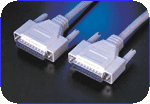
Parallel Data Cable (Printer extension cable, with male-female 25 pin connector, and pin to pin through) |
A-A type USB cable(for power) |
|
|
|
Optional Items:
|
ATMEL 89 Adapter |
ATMEL PLCC 44 Adapter |
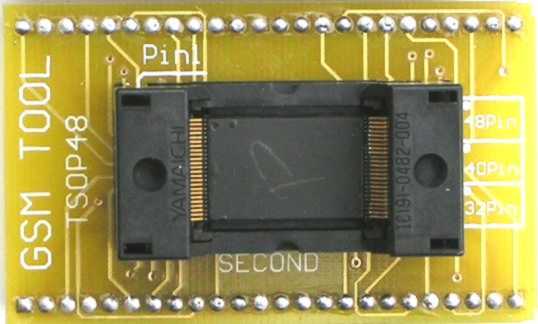
TSOP 48 Adapter |
|
|
|
|
|
FWH/HUB PLCC32Adapter |
PLCC32 Adapter |
SOIC Adapter(Simplified) |
|
On-Board |
On-Board |
|
|
AC or DC Power Adapter (9V or 12V, 200mA) |
SOIC Adapter(Professional) |
|
|
|
|
|
Before a performance or recording:
Piano is like singing. A phrase has a beginning, a middle arch, and an ending. Practice shaping a 4-bar phrase:
: The game supports both touch screen and Joy-Con inputs. For faster, more accurate note-hitting in "game" modes, the touch screen
: Perfecting a "comfort" song (something you already know). 5 Minutes : Free play/improvisation to keep it fun. piano learn and play 010038501a6b8000v0us better
Listen to professional recordings of the piece you’re learning. Notice how they phrase a melody or use the sustain pedal. 4. Technical Fundamentals (The "Un-Fun" Stuff)
| Issue | Fix | |-------|-----| | Keys don’t light up clearly | Increase screen brightness or use an external MIDI keyboard with built-in lights. | | Lag between tap and sound | Close background apps; use wired headphones (Bluetooth adds delay). | | Wrong fingerings | Write finger numbers above the falling notes (mental or paper). |
Instead, use a technique called micro-practicing. Isolate the specific two to four notes that cause you to stumble. Loop just that tiny fragment repeatedly until the physical movement feels natural. Once that micro-section is mastered, stitch it back into the surrounding musical phrase by practicing the bar immediately before and after it. Master Hands-Separate Practice Before a performance or recording: Piano is like singing
Practicing classical pieces can improve your technique, rhythm, and dynamics.
The world of piano education has dramatically evolved. Traditional one-on-one lessons with a teacher remain a gold standard for immediate, personalized feedback on your posture, technique, and musicality. However, technology has revolutionized how we can learn.
Before you start playing, take some time to get familiar with the piano's layout and features. The "Piano Learn and Play 010038501A6B8000V0US" comes with: For faster, more accurate note-hitting in "game" modes,
To improve your piano playing skills, focus on developing proper hand position, finger placement, and technique. Here are some basic techniques to get you started:
Attempting to coordinate both hands simultaneously on a new piece of music overloads your working memory. To build a foolproof foundation, always learn new sections with each hand separately first.
Hardware Installation & Configuration
|
Installation Steps
(Note: the LPT port of PC MUST set to ECP or ECP+EPP during BIOS setup. To enter the BIOS setting mode, you need press "Del" key or "F1" key during the computer selftest, which is the moment of computer just power up.)
Software Version To Use | |||
| |||
|
| |||
|
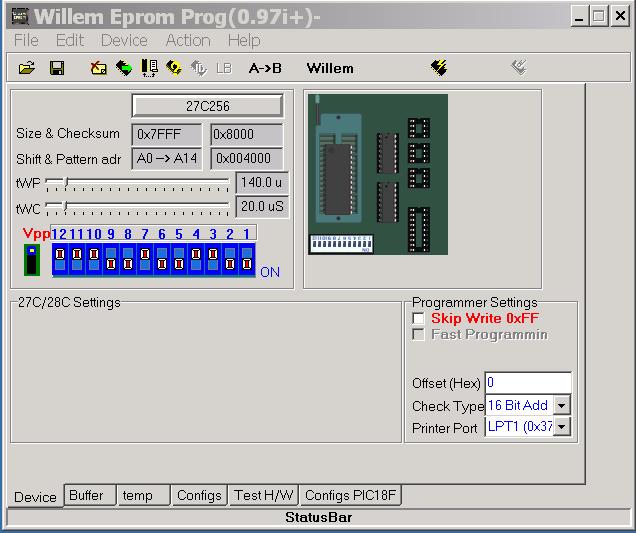
The software interface:
| |||
|
| |||
|
Hardware
Check
| |||
|
PCB3.5/PCB4E
PCB5.0
PCB5.5C
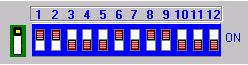
Note: the Vcc setting jumper only has effect when you are using AC adaptor as power source. For the USB power only 5V Vcc is available. For the PCB5.5C, set DIP steps: 1. press DIP Set button twice to check current DIP bit position. Then set it again for ON or OFF. 2. press DIP Bit shift button to shift the DIP bit position to where need to set. And then press DIP Set button twice to check current DIP bit position. Then set it again for ON or OFF. 3. Repeat those steps till all DIP bit ae set same as software indicated. For PCB5.5C voltage and Special chip selection: 1. Put back the safety jumper. 2. Press the voltage button and hold for 1 second, the voltage LED should move to next. Repeat till desired voltage LED light up. 3. Press the chip selection button and hold for 1 second, the chip LED should move to next. Repeat till desired LED light up. 4. Remove the safety jumper to lock the selected voltage and chip selection DIP Switch (PCB3.5, PCB5.0)
When programming one chip, follow the program prompt to set DIP switch .
|
Before a performance or recording:
Piano is like singing. A phrase has a beginning, a middle arch, and an ending. Practice shaping a 4-bar phrase:
: The game supports both touch screen and Joy-Con inputs. For faster, more accurate note-hitting in "game" modes, the touch screen
: Perfecting a "comfort" song (something you already know). 5 Minutes : Free play/improvisation to keep it fun.
Listen to professional recordings of the piece you’re learning. Notice how they phrase a melody or use the sustain pedal. 4. Technical Fundamentals (The "Un-Fun" Stuff)
| Issue | Fix | |-------|-----| | Keys don’t light up clearly | Increase screen brightness or use an external MIDI keyboard with built-in lights. | | Lag between tap and sound | Close background apps; use wired headphones (Bluetooth adds delay). | | Wrong fingerings | Write finger numbers above the falling notes (mental or paper). |
Instead, use a technique called micro-practicing. Isolate the specific two to four notes that cause you to stumble. Loop just that tiny fragment repeatedly until the physical movement feels natural. Once that micro-section is mastered, stitch it back into the surrounding musical phrase by practicing the bar immediately before and after it. Master Hands-Separate Practice
Practicing classical pieces can improve your technique, rhythm, and dynamics.
The world of piano education has dramatically evolved. Traditional one-on-one lessons with a teacher remain a gold standard for immediate, personalized feedback on your posture, technique, and musicality. However, technology has revolutionized how we can learn.
Before you start playing, take some time to get familiar with the piano's layout and features. The "Piano Learn and Play 010038501A6B8000V0US" comes with:
To improve your piano playing skills, focus on developing proper hand position, finger placement, and technique. Here are some basic techniques to get you started:
Attempting to coordinate both hands simultaneously on a new piece of music overloads your working memory. To build a foolproof foundation, always learn new sections with each hand separately first.